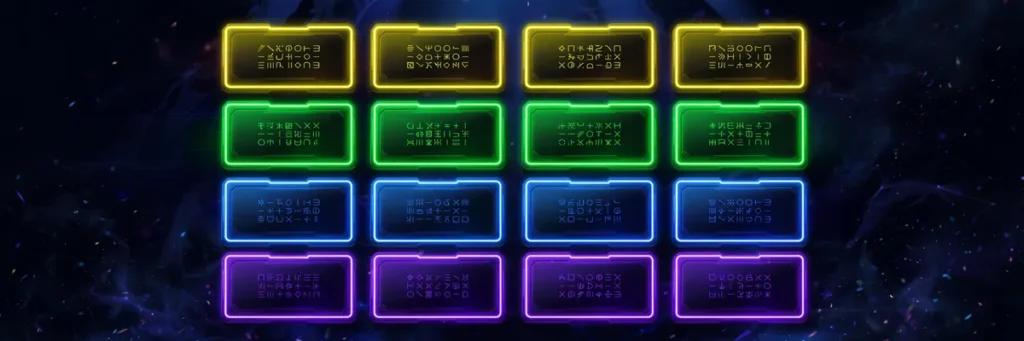
Connections looks simple at first glance. Sixteen innocent words sit on the screen, and your job is to sort them into four secret groups. Ten minutes later you are staring at the word BASS wondering whether it is a fish, an instrument, or the reason you just lost. Learning how to play Connections properly is the difference between a satisfying solve and a frustrating defeat, and this guide covers every rule, every color, and the strategies that actually work.
Connections groups 16 words into four sets of four. Yellow is the easiest group, then green, then blue, and purple is the hardest. Find the yellow group first, then work your way to purple.
No spoilers for real puzzles ahead. Every example here is invented, so you can learn the ropes without ruining a single daily board.
What Is Connections?
Connections is a daily word grouping puzzle from the New York Times. Each puzzle gives you 16 words arranged in a grid. Hidden inside are four groups of four, and each group shares something in common. A group might be types of fruit, things that are red, words that follow the word fire, or something far trickier. Your job is to find all four groups before you run out of mistakes.
The beauty of the game is that the link is never told to you. You have to discover it. And the puzzle designers love to plant words that seem to belong in two groups at once, just to test whether you are really sure.
How to Play Connections Step by Step
Playing a round takes about five minutes once you know the flow. Here is exactly what to do.
Step 1: Read all 16 words. Do not tap anything yet. Just read the full board slowly and let your brain notice patterns. Often one obvious group jumps out within seconds.
Step 2: Select four words you believe belong together. Tap them one by one. You can tap a selected word again to deselect it if you change your mind.
Step 3: Hit submit. If all four share the intended link, the group locks in and its color is revealed. If not, you lose one of your four allowed mistakes, unless you were one away, which means three of your four were right and the game tells you so.
Step 4: Repeat until all four groups are found. Solved groups move to the top of the board with their category name shown. Keep going until the board is clear. If you make four mistakes total, the game ends and reveals the answers.
Two handy tools: the shuffle button rearranges the tiles, which often breaks a mental block, and deselecting lets you rethink without penalty.
What the Colors Mean
Yellow marks the most straightforward group, the one most players notice first. Green is a gentle step up in difficulty. Blue demands sharper thinking and often hides behind words with double meanings. Purple is the trickiest of all and loves wordplay, like words that rhyme or words that all come before the same word. The colors do not change your score. They are simply the designers telling you how sneaky each group was meant to be.
Smart players use the colors as a hunting guide. If you are stuck, aim for the yellow style group first: the plain, obvious connection. Leave the weird, puzzling words for later, because those almost always belong to purple.
Common Beginner Mistakes
Almost everyone trips on the same traps the first few times. Here is what to watch for.
Guessing Before Saying the Link
The number one mistake is selecting four words that feel related without being able to name the exact connection. If you cannot say the link in one clear sentence, do not submit. “These are all fruits” is a link. “These feel outdoorsy” is not.
Falling for Red Herrings
Designers plant words that fit two groups on purpose. Maybe five words look like kitchen items but only four belong, while the fifth belongs with three others somewhere else. When a group seems too easy, double check that each word does not fit better elsewhere.
Chasing Purple First
New players love hunting the hardest group immediately. Resist the urge. Solve yellow and green first. Every solved group removes four words from the board, which makes the remaining puzzle dramatically easier.
Wasting Guesses on Hunches
You only get four mistakes. A random hunch is an expensive lottery ticket. If you are not at least fairly confident, shuffle the board and look again instead of submitting.
How to Play Connections Like a Solver: 7 Pro Tips
These are the habits that separate regular solvers from frustrated guessers.
- Find the yellow group first. Scan for the most obvious set of four, like four fruits or four colors. Banking the easy group early builds momentum and shrinks the board.
- State the link as a sentence. Before submitting, say it out loud: “These four are all types of hats.” If the sentence sounds vague, your group is probably wrong.
- Hunt for the odd one out. When five words seem to fit a theme, the fifth is usually the trap. Ask which four fit most tightly and where the leftover one might actually belong.
- Watch for words with double lives. Words like BASS, BOW, or TEAR can be nouns or verbs, or pronounced two ways. If a word will not fit anywhere, try its other meaning.
- Shuffle when you stall. The shuffle button costs nothing and often breaks the spell of seeing words in fixed positions. A fresh layout can reveal a group you stared at for minutes.
- Use one away as a compass. If the game tells you that you were one away, three of your four words are correct. Swap just one word at a time instead of rebuilding the whole guess.
- Save the weird words for last. The strangest words on the board usually belong to the purple group. Solve everything else first, and the leftover four often reveal their own sneaky logic.
Quick Answers for New Players
How many mistakes can I make? Four. Your fourth wrong guess ends the game, so treat every submission with respect.
Is there a timer? No. Take as long as you like. Connections rewards careful thought, not speed.
Can I play old puzzles? Yes, archives of past Connections puzzles exist online, which makes the game great for practice once you understand how to play Connections well.
Start with the easy group, name every link before you submit, and never trust a word that seems to fit too perfectly. Do that, and your solve rate will climb fast.